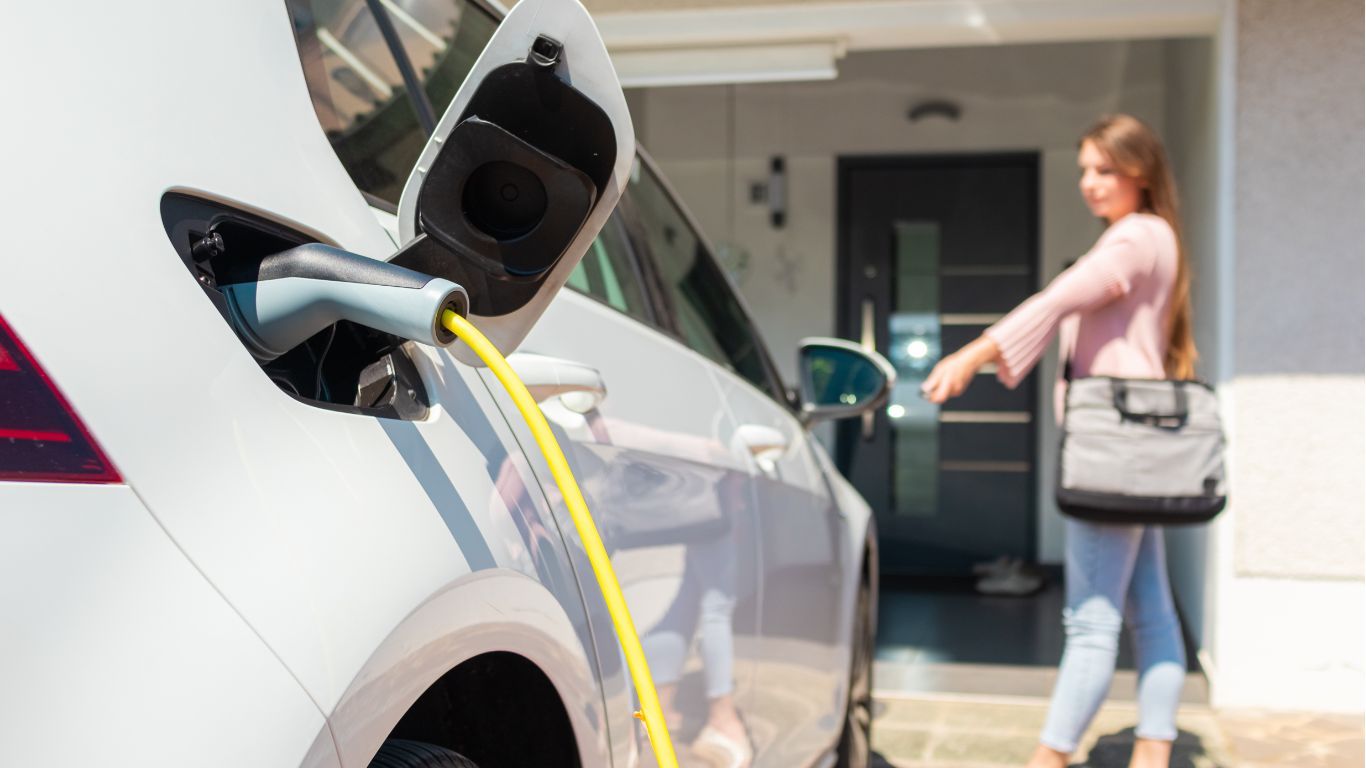
The shift toward electric vehicles is no longer a distant trend — it is happening right now, in driveways, parking lots, and company fleets across the country. As more employees make the switch to EVs, one question is rising to the top of the HR and facilities management agenda: how does a business keep its workforce charged up and ready to go? Providing workplace electric vehicle charging for employees has moved from a nice-to-have perk to a genuine competitive advantage, and in many cases, a practical necessity. This summer, with fuel prices fluctuating and environmental awareness at an all-time high, there has never been a better time for businesses of all sizes to take action and build out a workplace charging program that genuinely serves their people.
The good news is that providing EV charging at the workplace is more accessible than many employers assume. Whether you manage a small office with a modest parking lot or a large corporate campus with hundreds of spaces, there is a scalable path forward. The key is understanding the process from start to finish — assessing your needs, selecting the right equipment, planning the installation, managing costs, and communicating the benefit to your employees. When done well, workplace charging can boost employee satisfaction, strengthen your company's sustainability credentials, and even attract new talent who prioritize green commuting options.
Understanding Why Workplace EV Charging Matters for Your Business
Before diving into the how, it is worth taking a moment to understand the why — because the business case for workplace EV charging is genuinely compelling. Employees who drive electric vehicles spend a significant amount of time thinking about their charging routine. Unlike filling up a gas tank, which takes minutes, EV charging typically happens over hours. This makes the workplace an ideal charging location, since vehicles sit in parking spots for the duration of a workday anyway. By offering charging at work, employers essentially convert idle parking time into productive charging time, eliminating one of the most common pain points for EV drivers.
From a recruitment and retention standpoint, workplace charging sends a powerful signal. It tells current and prospective employees that the company values sustainability and invests in employee wellbeing. As more workers factor environmental responsibility into their career decisions, a well-designed EV charging program can meaningfully differentiate your organization. Beyond culture, there are also potential financial incentives to consider. Federal tax credits and various state-level programs have historically offered businesses financial relief for installing EV charging infrastructure, so it is worth consulting with a tax advisor or specialist installer to understand what incentives may be available to you at the time of your installation.
There is also the broader operational angle. Companies that install EV charging infrastructure now are positioning themselves ahead of the curve. As EV adoption accelerates, businesses that have already built out the necessary infrastructure will be far better prepared to accommodate a workforce that runs almost entirely on electricity. Starting the process now, rather than waiting until demand reaches a critical point, gives you time to plan thoughtfully and install systematically.
Assessing Your Workplace Charging Needs Before You Install
Every successful workplace EV charging program begins with a thorough assessment of current and future needs. Jumping straight to equipment selection without first understanding your specific situation is a common mistake that leads to over-investment, under-delivery, or both. The assessment phase should look at several interconnected factors: how many employees currently drive EVs, how many more are likely to make the switch within the next two to five years, the layout and capacity of your existing parking infrastructure, and the current state of your electrical system.
Start by surveying your workforce. A simple anonymous survey can reveal how many employees already drive or plan to purchase an electric vehicle, what their typical commute looks like, and whether they currently have charging available at home. This data gives you a baseline for how many charging stations you realistically need to install at the outset, and it helps you plan for future expansion. Many businesses start with a modest number of stations and build from there as demand grows, which is a smart and budget-conscious approach.
Next, assess your parking lot or garage layout. Consider factors like where electrical panels are located, how far charging stations would need to be from power sources, whether covered or uncovered spaces are available, and whether accessibility requirements need to be factored in for ADA compliance. This physical assessment is best done in collaboration with a qualified electrician or a specialized EV charging installation company, as they can identify potential challenges and opportunities that are not always obvious to the untrained eye.
Your electrical infrastructure is one of the most critical variables in this equation. Depending on how many chargers you plan to install and what charging speeds you want to offer, you may need to upgrade your electrical panel or service capacity. A load management assessment will reveal how much additional electrical demand your facility can accommodate, and whether upgrades are required before installation can begin. This is not something to guess at — getting a professional electrical assessment early in the process will save time, money, and frustration down the road.
Choosing the Right EV Charging Equipment for Your Employees
Once you have a clear picture of your needs, it is time to think about equipment. Workplace EV chargers generally fall into two categories: Level 2 chargers and DC fast chargers. For most workplace applications, Level 2 charging is the appropriate and cost-effective choice. Level 2 chargers typically deliver somewhere between 10 and 30 miles of range per hour of charging, which means a vehicle connected for a standard 8-hour workday will be fully replenished by the time the employee heads home. This makes Level 2 a practical fit for the typical workplace scenario where cars are parked for extended periods.
DC fast chargers, sometimes called Level 3 chargers, deliver much higher power and can charge a compatible vehicle to 80 percent in as little as 20 to 45 minutes. However, they come with significantly higher equipment and installation costs, and they require substantial electrical infrastructure to support. For most office or workplace settings, DC fast chargers are more than necessary and may not offer a good return on investment. They tend to make more sense in retail settings or public charging hubs where high vehicle turnover is expected.
Within the Level 2 category, there is meaningful variation in features and capabilities. Smart chargers with network connectivity allow you to monitor usage, manage access, set charging schedules, and even bill employees or allocate costs by department. These networked chargers typically come with a companion software platform or app that gives facility managers useful visibility into how the chargers are being used. Non-networked chargers are simpler and less expensive upfront but offer no usage data or remote management capability. For larger installations or companies that want to offer employee billing, networked chargers are generally the wiser long-term investment.
You will also want to think about connector compatibility. The vast majority of passenger EVs sold in North America use either the standard J1772 connector for Level 2 charging or, increasingly, the NACS connector popularized by Tesla and now being adopted across the industry. Many modern chargers include or support adapters for multiple connector types, which gives your employees flexibility regardless of what vehicle brand they drive. Working with an experienced EV charging provider like Premier EV Chargers helps ensure that the equipment you select is well-matched to your workforce's needs and future-proofed as the EV market continues to evolve.
Planning the Installation and Managing Ongoing Operations
With equipment selected and needs assessed, the next major step is planning the actual installation. This phase involves coordinating between your electrical contractor, your EV charging provider, your facilities team, and potentially your local utility company. The utility connection piece is often underestimated by first-time installers. Depending on the scale of your installation, you may need to notify or coordinate with your utility provider, especially if you are drawing significantly more power from the grid. Some utilities offer demand response programs or special rate structures for commercial EV charging, which can reduce your ongoing energy costs — another reason to engage them early in the process.
Physical installation considerations include trenching and conduit runs if chargers will be installed far from the electrical panel, mounting options (wall-mounted versus pedestal-mounted units), signage and parking space markings to designate EV charging spaces, and lighting if the installation is in a dimly lit area. Safety is a non-negotiable priority throughout this process. All installation work should be carried out by licensed electricians following local codes and any applicable national electrical standards.
Once chargers are operational, you will need a clear policy for how employees access and use them. Key questions to address in your policy include: Who is eligible to use the chargers? Will charging be free to employees, subsidized, or billed at cost? How will access be managed — via RFID cards, a mobile app, or open access? What happens when a charging space is occupied by a non-EV vehicle, or when an EV remains plugged in after it has finished charging? These are not trivial operational questions, and having a well-communicated policy from day one prevents confusion and resentment among employees.
Cost management is another ongoing consideration. The cost of electricity consumed by workplace chargers can add up, particularly as more employees adopt EVs and charging frequency increases. Some businesses choose to offer free charging as a fully employer-paid benefit, while others implement a cost-recovery model where employees pay for the electricity they use, often through the charging network's billing platform. Either approach can work well; the right choice depends on your company culture, budget, and how you want to position the benefit. Many organizations find that the goodwill generated by free or subsidized charging far outweighs the electricity cost, particularly when the number of users is manageable.
Scaling the program over time is something to plan for from the beginning. Installing conduit and electrical capacity for more chargers than you initially need is a smart strategy known as "make-ready" infrastructure. This approach significantly reduces the cost of adding chargers later, since the expensive trenching and electrical work has already been done. A good EV charging partner will help you design your initial installation with future growth in mind, so you are not starting from scratch every time demand increases.
Rolling Out Your Workplace Charging Program to Maximize Employee Adoption
A well-installed charging system is only as valuable as the employees who use it. Communicating the new benefit clearly and enthusiastically to your workforce is essential to driving adoption and ensuring the investment delivers the return you are looking for. Start building awareness before the chargers are even installed. Share updates on the project timeline, explain how access will work, and let employees know what steps they need to take to register or set up their account if you are using a networked system.
Consider hosting a brief information session or sending a detailed FAQ communication once the chargers go live. Cover topics like how to start a charging session, what the policy is around charging session duration, how to report a technical issue, and who to contact with questions. Make this information easy to find — on your company intranet, in a welcome email, or posted near the charging stations themselves.
Recognizing and celebrating the launch of the program can also generate positive energy around the initiative. Some companies use the rollout of workplace EV charging as an opportunity to reinforce broader sustainability messaging, tying the program into existing environmental or corporate social responsibility goals. This framing helps employees see workplace charging not just as a logistical convenience but as part of a larger organizational commitment to doing things better.
- Survey employees before installation to gauge current and anticipated EV ownership
- Start with Level 2 chargers for most workplace applications — they are cost-effective and well-suited to all-day parking
- Choose networked chargers if you need usage data, access control, or billing capabilities
- Assess your electrical infrastructure early and budget for any necessary upgrades
- Install make-ready conduit and capacity to allow easy future expansion
- Coordinate with your local utility to explore rate structures and demand response programs
- Develop a clear, written policy covering access, cost, and parking etiquette before the chargers go live
- Communicate the benefit proactively and enthusiastically to drive employee adoption
- Work with an experienced EV charging specialist to avoid costly mistakes
Providing workplace electric vehicle charging for employees is a process that rewards careful planning and expert guidance. It is not a simple plug-and-play project, but it is also far more achievable than many business owners initially believe. With the right partner, the right equipment, and a clear strategy, you can build a charging program that genuinely serves your workforce, supports your sustainability goals, and positions your business as an employer of choice in a rapidly changing world.
If you are ready to explore what workplace EV charging could look like for your business this summer, the team at Premier EV Chargers is here to help. From initial needs assessment to full installation and ongoing support, Premier EV Chargers brings the expertise and commitment to quality that your project deserves. Visit Premier EV Chargers' Workplace Charging page today to learn more and take the first step toward powering your employees' drive to work — and home again.
Leave A Reply
Search
Recent Posts